
ISFB Insight Online
The latest news on skills development in the banking and financial ecosystem in French-speaking Switzerland.
FEATURED

From Adoption to Embrace of Generative AI in the Workplace: A Dialogue Between Educational Sciences and Psychology – Chapter 3
There is a gap between the adoption of a technology and its integration into daily work—a gap that the humanities and social sciences are well acquainted with. Using a tool does not necessarily mean adopting it. Adoption refers to a deeper process, during which professionals experiment, adjust their practices, redefine their frame of reference, and gradually make sense of new ways of working.

Family Office: People at the Heart of Wealth Management
According to Pierre Ricq, Director of the ISFB Family Officer Certificate Program, wealth management truly comes into its own when it begins with the family’s values, history, and aspirations before turning its attention to the assets.


MUST-HAVES
CHECK IT OUT


ISFB Insight Print: The magazine for skills development in the banking and financial ecosystem of French-speaking Switzerland
The quarterly print publication features analyses, interviews, and opinion pieces on trends in the banking and finance industries.
The quarterly publication is distributed free of charge to ISFB member institutions, which may make it available to their staff, clients, or partners—particularly in their reception areas, lounges, waiting rooms, or reception areas.
Individuals can also receive the magazine as part of their ISFB Hub membership.

Since January 2023, ISFB Insight Online has primarily been an online publication. Articles, interviews, opinion pieces, newsletters, and social media posts keep pace with current events, industry trends, and ideas circulating in the French-speaking Swiss financial community. It’s all about immediacy: delivering information quickly, picking up on signals, sparking reactions, and gauging what captures attention. ISFB Insight Print operates on a different timeline. Print curates, compiles, and slows things down. It gives certain texts greater longevity, more space to certain voices, and greater weight to reflections that deserve to be preserved, reread, and shared. Digital media drives the momentum; print preserves the record. Between these two formats, different timeframes intersect. Some content remains available exclusively online to maintain its direct link to current events and extend the reading experience. Other articles, written by members for members, find their place solely in the print edition. ISFB Insight thus bridges the gap between the rapid circulation of ideas and the more enduring preservation of contributions.
Mathias Baitan, General Manager
MOST READ
EDITOR'S CHOICE

From Adoption to Internalization of Generative AI in the Workplace: A Dialogue Between Educational Sciences and Psychology – Chapter 2
There is a gap between the adoption of a technology and its integration into daily work—a gap that the humanities and social sciences are well acquainted with. Using a tool does not necessarily mean adopting it. Adoption refers to a deeper process, during which professionals experiment, adjust their practices, redefine their frame of reference, and gradually make sense of new ways of working.

Develop Skills Before It's Too Late
Given the simultaneous evolution of professions, tasks, and qualifications, understanding skills needs can no longer rely solely on the perspective of each individual institution. The ISFB Observatory thus builds on the founding vision of 1987: to pool perspectives and expertise in order to take action before it is too late.
C-LEVEL INTERVIEWS

Energy, passion, and adaptability: the three pillars of leadership for Nicolas Syz, CEO of SYZ Bank
There is a striking sincerity in the way Nicolas Syz talks about his journey. No heroic tale, but a path marked by travel, encounters, trials, and intuition. A story that reveals what drives him: energy as a way of being, emotion as a driving force, and adaptability as a reflex.

Understanding, deciding, communicating: Interview with Camille Vial, Managing Partner and CEO of Mirabaud & Cie SA
As the heir to a long banking tradition and a member of the seventh generation of the founding family, Camille Vial has served as the bank’s chair in Switzerland since 2019, making her the first woman to hold this position at the institution.
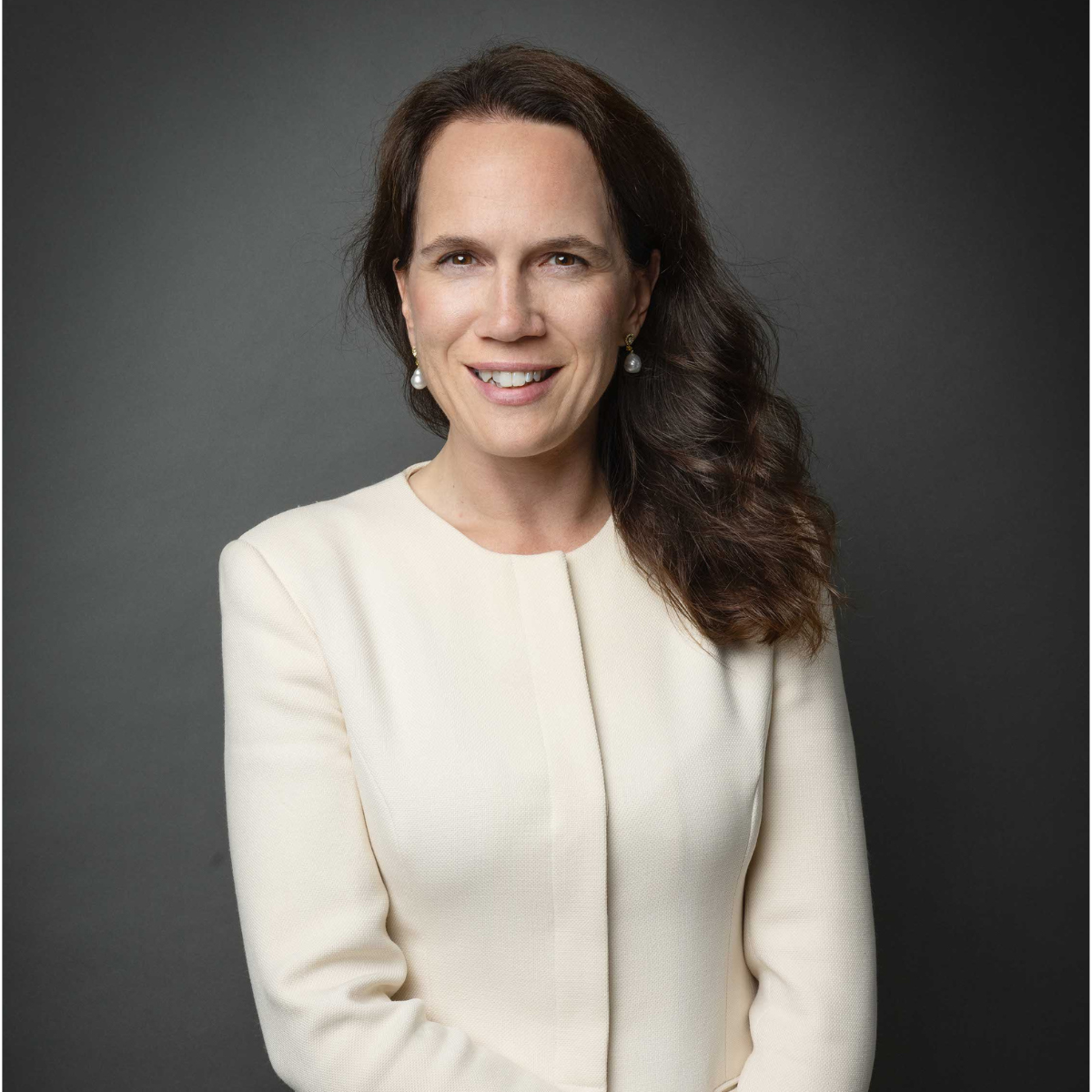
Running a bank means wanting to build something for the long term. Interview with Kim-Andrée Potvin, CEO of Bonhôte Bank.
From internal audit to senior management, Kim-Andrée Potvin has built a career deeply rooted in an understanding of how the banking industry works. Having become CEO of Banque Bonhôte in early 2025, she shares in this interview her career path, her vision of the role of a leader, and her perspective on the key skills required in the banking sector.

Interview with Hervé Broch, Chief Executive Officer at Banque Raiffeisen Région Genève Rhône
Continuing Education
Investing in talent to …
INTERVIEWS WITH HUMAN RESOURCES

AZQORE joins ISFB: a strategic choice for skills development
This partnership is part of a structured approach to certification, continuing education, and talent development, closely aligned with the challenges facing the banking sector.


Interview with Marina Bianchi Galanti: "Investing in skills is a key challenge for the banking sector".
The Institute
Interview with Marina Bianchi Galanti: “Investing …


Emotional regulation: a key professional skill for staying clear-headed in complex situations
In today's fast-paced world, knowing how to regulate your emotions is becoming a key skill. Far from being a matter of personal development, this ability is part of true professional intelligence: the ability to stay the course in complex situations, to make the right decisions and to remain solid in the face of uncertainty - just as the most seasoned executives of our time know how to do.

What the career paths of Swiss bank executives tell us about skills and talent development
Since the early days of digital transformation in the 1990s, banks have continually reinvented themselves to adapt to changes in their environment. The digital revolution alone has profoundly transformed the way banks operate and interact with their customers.
From Adoption to Embedding Generative AI in the Workplace: A Dialogue Between Educational Sciences and Psychology – Chapter 1
Generative AI has made its way into the workplace before organizations have had time to establish guidelines for its use. In this article, Joseph Baud-Grasset and Stéphane Bonzon share their perspectives to distinguish between adoption and appropriation, and to emphasize that the professional use of AI requires discernment, collective learning, and responsibility.
Generative AI: What Research Already Says About the Work
Generative AI promises to save time. But what impact does it actually have on work, motivation, autonomy, and professional judgment? In a publication by the ISFB Observatory of Banking and Financial Skills, Stéphane Bonzon, a psychologist at ISFB, analyzes what early research has already revealed.

Ignacio Ramirez: “It is now possible to solve very specific problems without any technical barriers.”
ISFB Insight
{post_terms,type:category,parents:yes,separator: | ,link:yes}
Interview with Ignacio Ramirez, lecturer at …

Continuing education: a practical way to boost employability
In a rapidly changing world of work, continuing education is no longer just a perk. It has become a key driver of employability. Of course, continuing education helps keep one’s knowledge up to date. But its role goes beyond that. Continuing education helps secure career paths, supports career development, and strengthens the ability to adapt to changes in the labor market. In other words, it’s not just about learning more. It helps you stay relevant in your profession over the long term.

Skills for career development in banking and finance
The banking and financial sector in French-speaking Switzerland, particularly in Geneva, is a key pillar of the regional economy. According to the 2025 Banking Barometer published by the Swiss Bankers Association (SBA), the banking workforce has continued to grow. For 2025, the State Secretariat for Economic Affairs (SECO) forecasts a slight recovery in economic growth to 1.3%, driven by solid domestic demand and the recent decline in the Swiss franc—but given the current situation, these forecasts are highly uncertain.

6 key steps for finding a job
Careers – Recruitment 6 Key Steps for a Job Search
{post_date} …


