ISFB Certificate Credits
Category
Retail & Corporate Banking
Support and transversal functions
Support and transversal functions
Level
Fundamentals
Format
Presential
Duration
7 non-consecutive days
Language
French
Location
ISFB Geneva premises
Director
Jérôme Piguet
Manager
Joseph Baud-Grasset
Type
ISFB Certificates
Description
Prices & Admission
Content
Testimonials
Context
Lending has always been the core business of Swiss banks. This credit business is both quantitatively and qualitatively significant and varied, both in terms of the clientele concerned and the different solutions that can be offered to customers.
As a key companion to economic activity, credit is also a flagship product for wealth management. With access to capital markets becoming ever more democratic, and the maturing of alternative tools and techniques (participative financing, securitization, etc.), mastery of credit activities is becoming a key skill for players in the banking and finance industry, as well as for customers heavily involved in activities in which financing plays a pivotal role (trading, real estate, in particular).
As a key companion to economic activity, credit is also a flagship product for wealth management. With access to capital markets becoming ever more democratic, and the maturing of alternative tools and techniques (participative financing, securitization, etc.), mastery of credit activities is becoming a key skill for players in the banking and finance industry, as well as for customers heavily involved in activities in which financing plays a pivotal role (trading, real estate, in particular).
Key objectives
1. identify the main features of various forms of financing.
2. analyze a file, gather the necessary documentation and manage the risks inherent in credit.
3. propose the right financing solution to a customer, based on their needs and the purpose of the loan.
2. analyze a file, gather the necessary documentation and manage the risks inherent in credit.
3. propose the right financing solution to a customer, based on their needs and the purpose of the loan.
Target audience
- Private customer advisor or asset management assistant who wants to broaden his or her skills (corporate loans, promotions, guarantees, recovery, Lombard loans, etc.).
- Financing advisor in France who wants to adapt his or her knowledge to Swiss practice and legislation
- Credit administration employee (private and commercial) who wants to understand customer relations, situation analysis, financing arrangements (choice of guarantees), argumentation and product selection.
- Financing advisor in France who wants to adapt his or her knowledge to Swiss practice and legislation
- Credit administration employee (private and commercial) who wants to understand customer relations, situation analysis, financing arrangements (choice of guarantees), argumentation and product selection.
Stakeholders
ISFB lecturers have been working in the banking and financial world, or in their respective fields, for many years and are recognized as some of the best experts in our ecosystem in French-speaking Switzerland.
Reviews
The certificate is validated by means of a 120-minute written QCS exam (simple-choice questionnaire, one and only one correct answer). Emphasis is placed on comprehension, application and the ability to analyze and solve concrete cases using the tools and methods learned in training. Candidates have the right to consult course materials, appendices and personal notes (open notes exam concept).
Practical information
ISFB Certificates of Specialization are recognized by all member institutions. They are an important professional asset on the job market in French-speaking Switzerland.
Price
- Public: CHF 5,670
- Member: CHF 4,250
- HG / OCAS / OCE : CHF 2'835.-
- Training cheque: CHF 5,670.00
C01
Credits - Introduction
Content: This module provides a comprehensive introduction to the fundamentals of bank lending, highlighting the role of banks in their financial intermediation function and the mechanisms involved in securitizing loans. Participants will learn about the different types of credit available on the market, such as consumer credit, leasing, Lombard credit and commitment credit, each of which meets specific needs.
Particular attention will be paid to the nature of the hedges used to secure credit, and their usefulness in risk management. The module will also look at how companies are financed according to their stage of development, from start-up to growth and maturity.
Finally, participants will learn how to identify financing goals, understand the granting criteria applied by financial institutions, and implement rigorous monitoring of commitments. Through concrete examples, this module aims to provide the foundations needed to understand the challenges of credit within a regulated framework geared towards risk control.
Particular attention will be paid to the nature of the hedges used to secure credit, and their usefulness in risk management. The module will also look at how companies are financed according to their stage of development, from start-up to growth and maturity.
Finally, participants will learn how to identify financing goals, understand the granting criteria applied by financial institutions, and implement rigorous monitoring of commitments. Through concrete examples, this module aims to provide the foundations needed to understand the challenges of credit within a regulated framework geared towards risk control.
Duration: 8h00
Format: In-person
Possible contributors: PIGUET Jerome
C02
Mortgage Credits
Content: This module provides an overview of mortgage financing in Switzerland, integrating the legal, financial and regulatory aspects essential to understanding and managing it. It begins with a presentation of the types of property covered by the Swiss Civil Code, as well as individual and collective forms of ownership, which have a direct impact on financing arrangements.
Participants will discover the different types of mortgage financing, the interest rate variants (fixed, variable, mixed), and the implications of each for borrowers and lending institutions. The module also looks in depth at the role of the land register, the function of the mortgage note as a legal guarantee, and the effects of easements on the value and liquidity of real estate.
Particular attention is paid to the documentation required for granting a mortgage loan, drawing up a financing plan, and methods of valuing real estate. Participants will learn how to analyze a loan application, calculate the customer's effort ratio, and understand the criteria for rating and monitoring a loan throughout its lifetime.
This module aims to provide the essential foundations for evaluating, structuring and monitoring a mortgage loan in compliance with the regulatory and prudential requirements specific to the Swiss market.
Participants will discover the different types of mortgage financing, the interest rate variants (fixed, variable, mixed), and the implications of each for borrowers and lending institutions. The module also looks in depth at the role of the land register, the function of the mortgage note as a legal guarantee, and the effects of easements on the value and liquidity of real estate.
Particular attention is paid to the documentation required for granting a mortgage loan, drawing up a financing plan, and methods of valuing real estate. Participants will learn how to analyze a loan application, calculate the customer's effort ratio, and understand the criteria for rating and monitoring a loan throughout its lifetime.
This module aims to provide the essential foundations for evaluating, structuring and monitoring a mortgage loan in compliance with the regulatory and prudential requirements specific to the Swiss market.
Duration: 8h00
Format: In-person
Possible speakers: GIROD Philippe
C03
Mortgages - case studies
Content: This module offers a practical and operational approach to mortgage lending, through the study of case studies representative of situations encountered in banking. Participants will learn to identify the elements needed to value a property acquired for their own use, taking into account its location, market value and financing potential.
The course also covers the use of the 2nd pillar in the context of property acquisition, explaining the conditions, limits and tax implications of this retirement savings vehicle. A section is devoted to the valuation of investment properties, with an analysis of the financial and technical criteria for estimating their profitability.
Participants will learn how to finance the acquisition of investment properties, taking into account the specificities of rental income, vacancy risks and hedging requirements. Finally, the module presents the rules to be observed when acquiring real estate, both regulatory and prudential, to ensure sound credit risk management.
Through real-life situations, participants will develop their ability to evaluate, structure and monitor mortgage financing, in line with Swiss market standards.
The course also covers the use of the 2nd pillar in the context of property acquisition, explaining the conditions, limits and tax implications of this retirement savings vehicle. A section is devoted to the valuation of investment properties, with an analysis of the financial and technical criteria for estimating their profitability.
Participants will learn how to finance the acquisition of investment properties, taking into account the specificities of rental income, vacancy risks and hedging requirements. Finally, the module presents the rules to be observed when acquiring real estate, both regulatory and prudential, to ensure sound credit risk management.
Through real-life situations, participants will develop their ability to evaluate, structure and monitor mortgage financing, in line with Swiss market standards.
Duration: 8h00
Format: In-person
Possible speakers: GIROD Philippe
C04
Real estate development
Content: This module explores the financing mechanisms used in real estate development, with particular emphasis on the use of guarantees as a means of securing financing. Participants will learn to define guarantees, understand their uses in financing, and distinguish between the types and characteristics most commonly mobilized in real estate transactions (mortgages, cedulas, sureties, etc.).
The course also covers the rules associated with financing via guarantees, including regulatory requirements, implementation conditions, and risk implications. Particular attention is paid to the risks associated with guarantees, whether legal, operational or linked to the valuation of the underlying assets.
Through practical case studies, participants will be able to analyze financing packages, assess the suitability of the proposed guarantees, and identify the points to watch to ensure compliant and prudent management of real estate development operations.
The course also covers the rules associated with financing via guarantees, including regulatory requirements, implementation conditions, and risk implications. Particular attention is paid to the risks associated with guarantees, whether legal, operational or linked to the valuation of the underlying assets.
Through practical case studies, participants will be able to analyze financing packages, assess the suitability of the proposed guarantees, and identify the points to watch to ensure compliant and prudent management of real estate development operations.
Duration: 4h00
Format: In-person
Intervenants possibles : GENSALE Flavio
C05
Financial statement analysis
Content: This module gives participants an in-depth understanding of how syndicated loans work, in relation to financial analysis and complex financing requirements. It begins with a clear definition of a syndicated loan, explaining the roles, interests and responsibilities of the various stakeholders: lead bank, co-arrangers, participants and borrower.
The course explores the typology of syndicated loans, according to the nature of the financing (corporate, acquisition, project, commodities), and details the syndication process, from initial structuring to post-award monitoring. Particular attention is paid to the specific application to the commodities sector, where the challenges of liquidity, volatility and securing flows are particularly sensitive.
Through practical case studies, participants will learn how to analyze a borrower's financial statements, assess its debt capacity, draft a syndicated loan application, and set up a credit monitoring system that complies with regulatory and prudential requirements.
The course explores the typology of syndicated loans, according to the nature of the financing (corporate, acquisition, project, commodities), and details the syndication process, from initial structuring to post-award monitoring. Particular attention is paid to the specific application to the commodities sector, where the challenges of liquidity, volatility and securing flows are particularly sensitive.
Through practical case studies, participants will learn how to analyze a borrower's financial statements, assess its debt capacity, draft a syndicated loan application, and set up a credit monitoring system that complies with regulatory and prudential requirements.
Duration: 4h00
Format: In-person
Possible speakers: KRAMER Christian
C06
Financing for SMEs
Contents: This module addresses the challenges of financing small and medium-sized businesses, integrating real estate, tax and pension aspects. Through practical case studies, participants will learn to apply the various methods for calculating the value of a property, whether an operating asset or a heritage asset, in order to assess its contribution to the overall financing plan.
The course also explores the tax implications of real estate, particularly in terms of deductibility, capital gains and legal structuring, as well as the possibilities offered by occupational pension provision (2nd pillar) in the context of the acquisition or financing of real estate by an SME.
This module aims to provide professionals with the necessary tools to structure financing tailored to the needs of SMEs, while integrating the regulatory constraints and opportunities linked to real estate asset management.
The course also explores the tax implications of real estate, particularly in terms of deductibility, capital gains and legal structuring, as well as the possibilities offered by occupational pension provision (2nd pillar) in the context of the acquisition or financing of real estate by an SME.
This module aims to provide professionals with the necessary tools to structure financing tailored to the needs of SMEs, while integrating the regulatory constraints and opportunities linked to real estate asset management.
Duration: 8h00
Format: In-person
Possible speakers: KRAMER Christian
C07
Bank guarantees
Contents: This module introduces bank guarantees as key instruments in structuring and securing credit. It begins with a presentation of the definition of guarantees and their uses in financing, highlighting their role in reducing counterparty risk and protecting the lender's interests.
Participants will learn about the most common types of guarantees - real (mortgages, pledges) and personal (surety bonds, letters of guarantee) - and their legal and financial characteristics, particularly in terms of validity, ranking and enforcement.
The module then addresses the rules associated with financing via guarantees, in relation to Swiss regulatory requirements, prudential practices and documentation standards. Particular attention is paid to the risks associated with collateral, such as asset depreciation, ownership disputes, or enforcement difficulties in the event of default.
Through practical case studies, participants will be able to analyze concrete situations, assess the suitability of proposed collateral, and integrate these elements into an overall approach to credit risk management.
Participants will learn about the most common types of guarantees - real (mortgages, pledges) and personal (surety bonds, letters of guarantee) - and their legal and financial characteristics, particularly in terms of validity, ranking and enforcement.
The module then addresses the rules associated with financing via guarantees, in relation to Swiss regulatory requirements, prudential practices and documentation standards. Particular attention is paid to the risks associated with collateral, such as asset depreciation, ownership disputes, or enforcement difficulties in the event of default.
Through practical case studies, participants will be able to analyze concrete situations, assess the suitability of proposed collateral, and integrate these elements into an overall approach to credit risk management.
Duration: 4h00
Format: In-person
Possible speakers: ROBERT-TISSOT Alexandre
C08
Syndicated loans
Content: This module immerses participants in the workings of syndicated loans, focusing on the key stages of the process and compliance issues. Through practical case studies, participants will learn to understand complex financing needs, define the right type of syndicated loan, and identify the stakeholders involved.
The course details the essential information to be gathered to structure a transaction, including the customer's financial, legal and operational data. Participants will be trained to analyze contractual documents, identify potential obstacles and propose suitable solutions, in line with regulatory requirements and market standards.
The module also includes exercises on calculating debt capacity, drafting a syndicated loan application, and best practices for monitoring loans throughout their lifecycle. The aim is to enable finance and compliance professionals to master the specificities of syndicated loans, while ensuring rigorous management of risk and documentation.
The course details the essential information to be gathered to structure a transaction, including the customer's financial, legal and operational data. Participants will be trained to analyze contractual documents, identify potential obstacles and propose suitable solutions, in line with regulatory requirements and market standards.
The module also includes exercises on calculating debt capacity, drafting a syndicated loan application, and best practices for monitoring loans throughout their lifecycle. The aim is to enable finance and compliance professionals to master the specificities of syndicated loans, while ensuring rigorous management of risk and documentation.
Duration: 4h00
Format: In-person
Possible contributors: DEFAGO Nicolas
C09
Business transfer and recovery
Content: This module offers a practical approach to the complex financing mechanisms involved in transferring businesses and managing recovery situations. Through practical case studies, participants will learn how to structure the financing of real estate developments, taking into account the risks associated with the development, marketing and valuation of assets.
The course also covers the principles of structured financing, used in highly leveraged transactions or with specific legal arrangements, as well as corporate acquisition financing, with particular attention paid to analyzing the profile of the buyer, the target and future cash flows.
Finally, the module deals with financing restructuring strategies, in stressed or turnaround contexts, integrating legal, financial and operational dimensions. Participants will be required to simulate transfer, risk analysis and renegotiation scenarios, in order to develop an in-depth understanding of compliance and risk management issues in these sensitive operations.
The course also covers the principles of structured financing, used in highly leveraged transactions or with specific legal arrangements, as well as corporate acquisition financing, with particular attention paid to analyzing the profile of the buyer, the target and future cash flows.
Finally, the module deals with financing restructuring strategies, in stressed or turnaround contexts, integrating legal, financial and operational dimensions. Participants will be required to simulate transfer, risk analysis and renegotiation scenarios, in order to develop an in-depth understanding of compliance and risk management issues in these sensitive operations.
Duration: 8h00
Format: In-person
Possible speakers: MENZEL François
CIGR
Review
Content: The aim of the final exam is to validate the skills acquired during the course, by consolidating the practical and theoretical knowledge developed throughout the program. It enables participants to demonstrate their mastery of the concepts covered, their ability to articulate the various contributions of the course within a professional logic, and to identify the evolution of their personal skills.
The test takes the form of a 40-question MCQ, in open book format: participants can consult their course materials, appendices and personal notes. The exam lasts 120 minutes, i.e. 3 minutes per question. Each question has only one correct answer, and no negative marks are awarded for incorrect answers.
The questions are general, with no traps, and are based exclusively on content clearly covered in the course or in the training materials.
The test takes the form of a 40-question MCQ, in open book format: participants can consult their course materials, appendices and personal notes. The exam lasts 120 minutes, i.e. 3 minutes per question. Each question has only one correct answer, and no negative marks are awarded for incorrect answers.
The questions are general, with no traps, and are based exclusively on content clearly covered in the course or in the training materials.
Duration: 2h00
Format: In-person
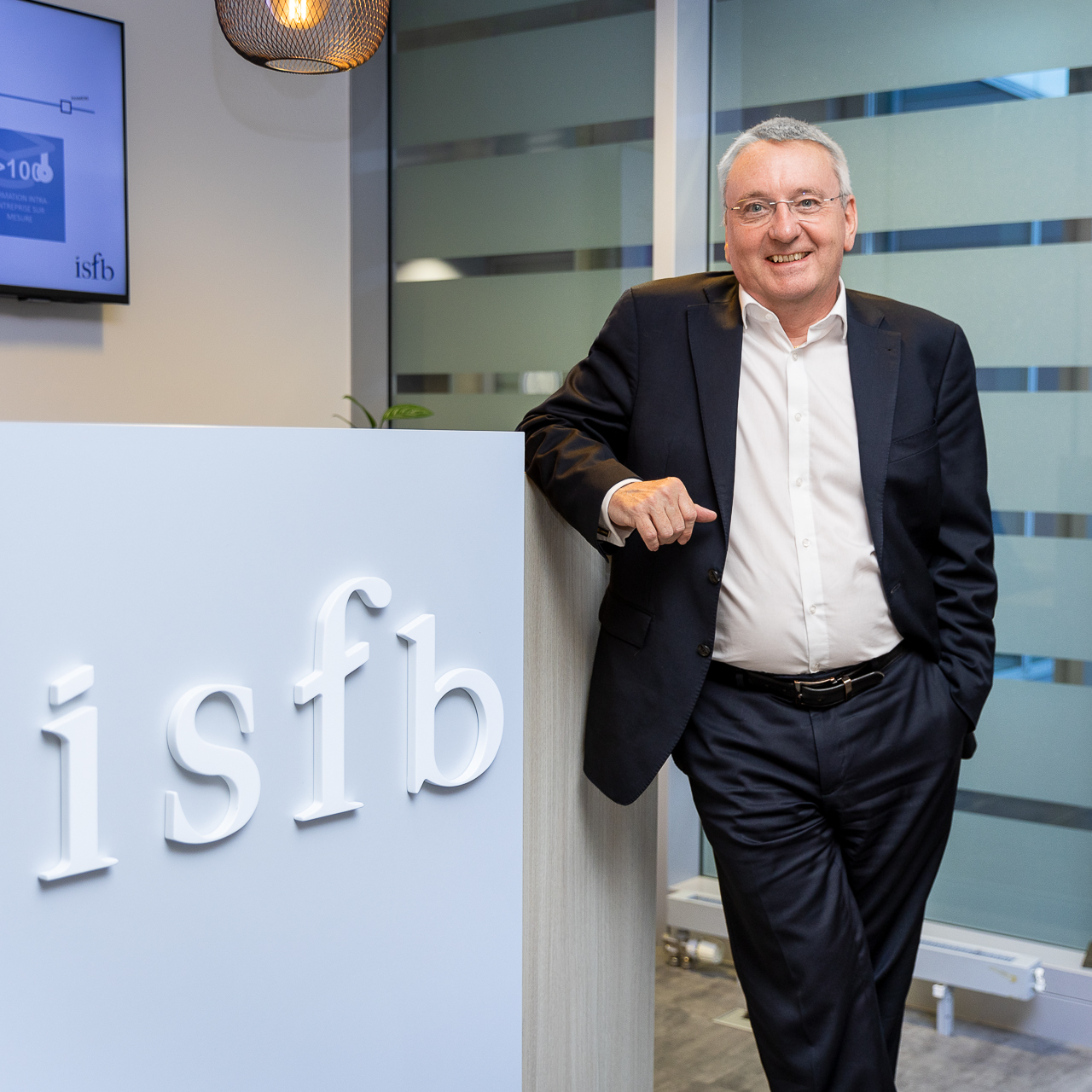
Interview with François Menzel (Valiant Bank): Credit, an essential pillar of the banking industry
François Menzel - Head of corporate customer region (Banque Valiant)
In this interview, François Menzel shares his experience as a speaker and his vision of the challenges related to credit and financing for SMEs. Find out how the ISFB Credit certificate meets training needs in this crucial area.
Read the interview

Developing skills to meet challenges: interview with Mr Leuenberger
Pierre-Alain Leuenberger - General Manager of Banque Cantonale Neuchâteloise
"Providing our customers with support that meets their expectations and giving our staff the means to ensure their long-term employability, regardless of their job or position, is clearly one of our priorities."
Read the interview

Interview with Julian Jacquin, ISFB Certified in Credit
Julian Jacquin - Credit Officer (Banque Syz)
"This training program provides participants with an in-depth understanding of different types of loans, teaches them how to analyze risks, and shows them how to offer customized solutions tailored to customer needs."
Read the interview
Information
A question about this service? Our manager is at your disposal

Category
Retail & Corporate Banking
Support and transversal functions
Support and transversal functions
Level
Fundamentals
Format
Presential
Duration
7 non-consecutive days
Language
French
Location
ISFB Geneva premises
Director
Jérôme Piguet
Manager
Joseph Baud-Grasset
Type
ISFB Certificates
Information
A question about this service? Our manager is at your disposal
Registration